
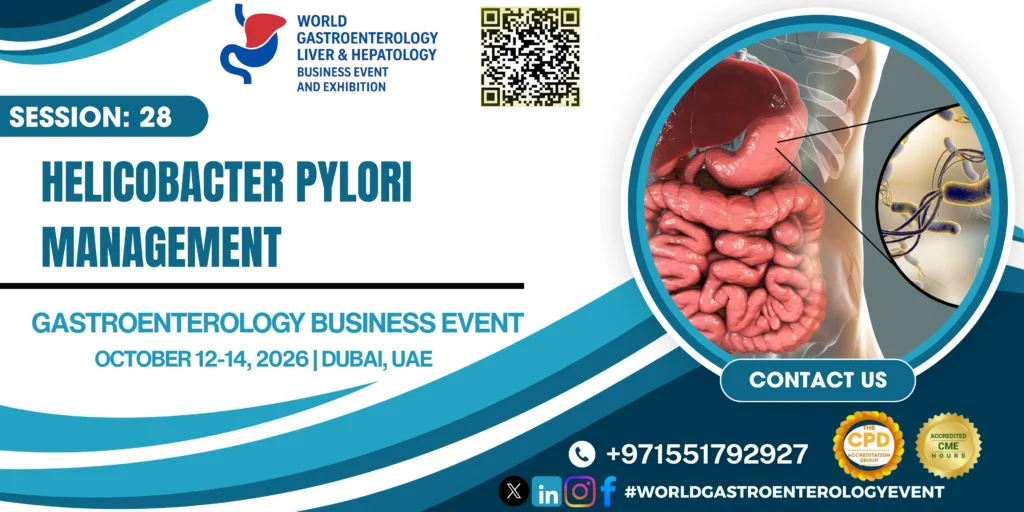
Purpose: Helicobacter pylori infection remains a major cause of gastritis, peptic ulcer disease, and gastric cancer, making effective management a critical priority in gastroenterology. Advances in diagnostic testing, antibiotic regimens, resistance-guided therapy, and patient follow-up models have transformed H. pylori management into a structured, scalable care pathway.
Upload here: https://gastroenterology-hepatology.utilitarianevents.com/upload-presentation/
WhatsApp: https://wa.me/+971551792927
Email: info-ucg@utilitarianconferences.com
Keynote Points:
High global prevalence of H. pylori infection
Demand for accurate non-invasive and endoscopy-based diagnostics
Growth in combination therapies and resistance-guided treatment protocols
Integration of test–treat–confirm eradication models
Opportunities for patient adherence, monitoring, and digital follow-up tools
Collaboration with clinics, hospitals, and laboratory networks
Preventive focus to reduce ulcer recurrence and gastric cancer risk
Benefits:
Large, recurring patient base requiring diagnosis, treatment, and follow-up
Strong ROI through bundled diagnostics and treatment pathways
Predictable revenue via standardized management protocols
Differentiation through evidence-based and guideline-driven care models
Support for preventive healthcare and cancer-risk reduction initiatives
Scalable business opportunities across clinical, diagnostic, and digital platforms